
A fire pit room built into the ground
The Sunken Fire Lounge
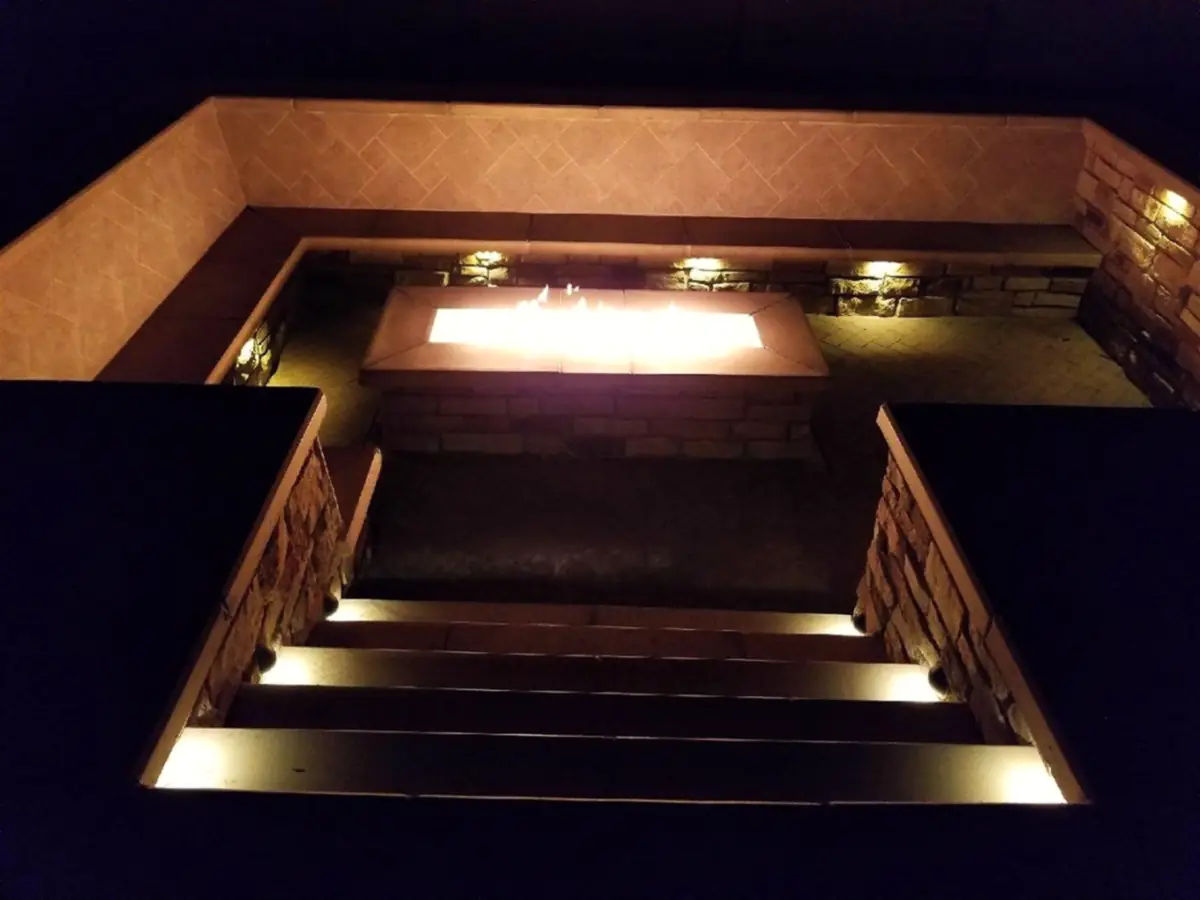
A new-build backyard that was nothing but dirt, turned into an outdoor room set a few feet into the ground — built-in seating on three sides, a long gas fire down the middle, and lit steps leading down.
The situation
What the owners wanted.
This was a brand-new home with a flat, bare backyard and a white vinyl fence — no trees, no shade, nothing to break the wind. The owners wanted one place the whole family would actually use in the evenings, not just a fire pit sitting on a patio.
Flat new-build lots in the south end of the valley catch a lot of wind. A fire pit on the surface gets blown sideways and the people around it get cold. So instead of building up, we dug down.
What we used — and why
Every piece has a reason.
- 1
A room dug below ground level
Sitting a few feet below the lawn puts the wind over your head instead of across your fire. It also makes the space feel like a room — private, sheltered and cozy — without adding a single wall that blocks the view from the house.
- 2
Concrete footings with steel rebar
The walls sit on poured footings, reinforced with rebar, below the frost line. Utah winters freeze and thaw the ground over and over; without proper footings, walls this size heave and crack within a few years.
- 3
Block walls faced with stacked stone
Concrete block does the heavy lifting of holding back the soil; the stone facing is what you see. You get the strength of a structural wall and the warm look of natural stone.
- 4
Built-in seat walls with wide stone caps
The walls are exactly the right height to sit on, with caps wide enough to be comfortable. That means room for a crowd without buying, storing or replacing outdoor furniture every few years.
- 5
Brick paver floor in a herringbone pattern
Herringbone locks the pavers together so the floor stays tight and flat, and the warm brick color keeps the room from feeling like a concrete bunker.
- 6
Natural gas fire trough
Turn a key and you have fire — no wood to buy, no smoke in your eyes or on your clothes, no ash to clean up. The long, low flame reaches everyone on the benches, not just the person closest to it.
- 7
Lights under the caps and in every step
The steps down are lit so nobody misses one after dark — which is exactly when this room gets used. The glow on the stone is also what makes it look the way it does at night.
Utah weather
Built for Salt Lake Valley evenings
Our climate is dry, and dry air loses heat fast. Even in July, evenings in the Salt Lake Valley cool off quickly once the sun drops behind the Oquirrhs — and on open new-build lots on the west and south side, the wind picks up at the same time. A room set below ground level holds the warmth of the fire and keeps that wind overhead, so the space stays comfortable from April well into October.
Utah winters freeze and thaw the ground again and again. That movement is what cracks walls built on shallow footings, so these walls sit on poured, reinforced footings below the frost line. A sunken room also has to deal with snowmelt and spring storms, so drainage is planned before the first shovel goes in.
Natural gas matters here too. With a gas trough there is no wood to store through the winter and no smoke drifting into the neighbors' yards on the many days the valley's air quality is poor.
Is this right for you?
A great fit for…
- Families who like to be outside in the evening and want a gathering spot everyone fits in.
- New-build backyards that are a blank slate and need one feature to build the rest of the yard around.
- Windy lots where a normal fire pit is more trouble than it's worth.
- Anyone who wants the "wow" piece of the neighborhood — this is the build people ask about.
Good to know
The honest details.
This is one of the most involved things we build: digging, footings, walls, gas and electrical all come together. If you want the fire and the gathering spot for less, a paver patio with a round fire pit and seat wall is a great alternative.
A room below ground has to be planned for drainage before anything is dug. We work that out when we walk the yard.
A natural gas line needs to reach the spot. We plan the route during the estimate.
Every yard is different. We build these across Riverton, Herriman, South Jordan, Draper, Bluffdale and the rest of the Salt Lake Valley, and the best way to know what yours needs — and what it will cost — is to have Jason walk it with you. Call 801-608-7207 for a free estimate.
Photos
The finished work.
Tap any photo to see it full size.
During the build
The part you never see again — and the reason it lasts.
Free estimate
Let’s walk your yard together.
Call and tell us what you have in mind. Jason will come out, walk the property with you, and give you a written estimate — free, with no obligation.
Mon–Fri · 8:00–5:00 · Riverton, Utah · Licensed & insured